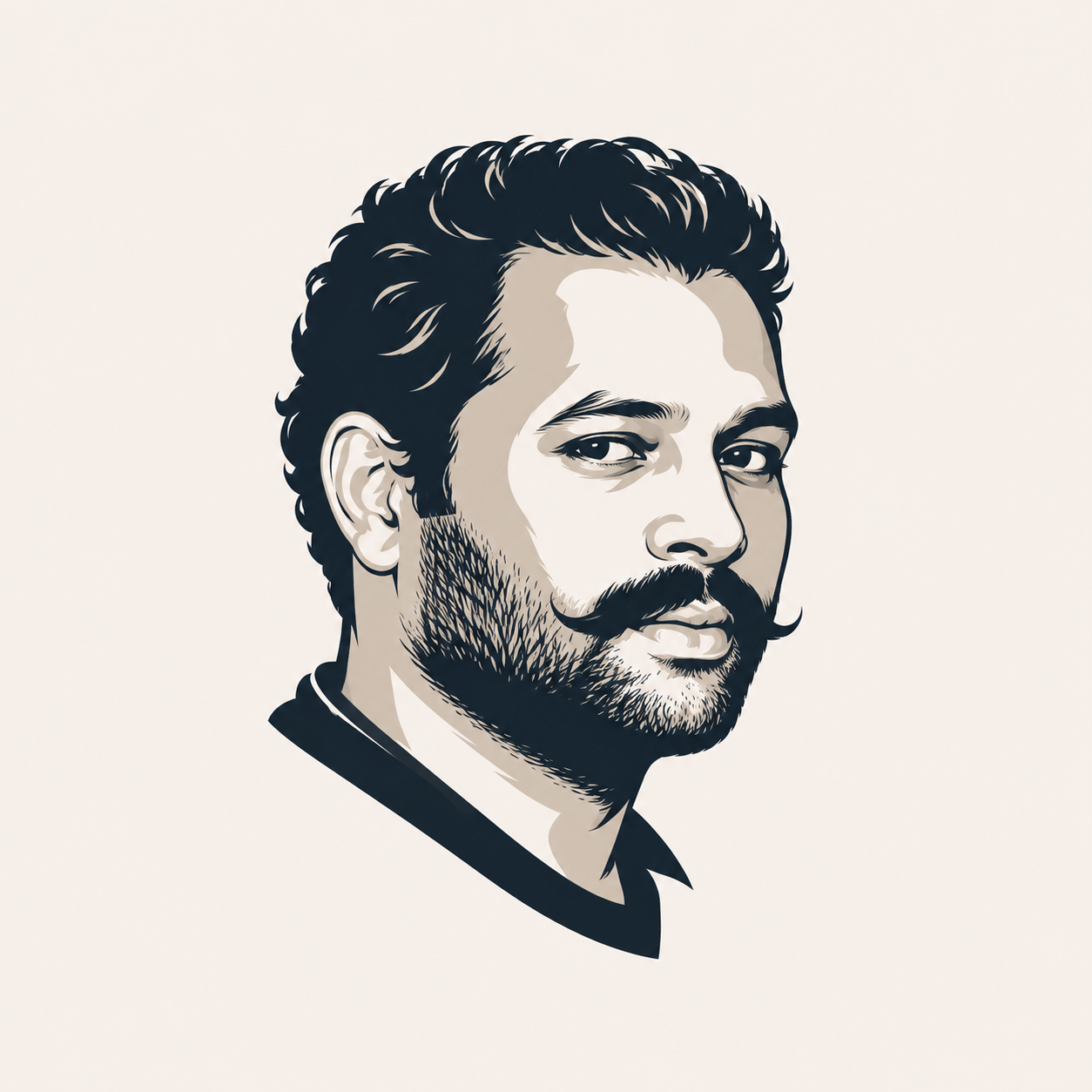
"Culture is not a memory of the past—it is the foundation upon which every future civilisation is built. My vision is to ensure that India's languages, literature, knowledge systems, and heritage become living digital assets for future generations."
Indian civilisation is one of humanity's oldest continuous knowledge traditions, preserving thousands of years of philosophy, science, literature, architecture, spirituality, mathematics, medicine, governance, music, and artistic expression.
As Artificial Intelligence reshapes the future, preserving this knowledge is no longer only a cultural responsibility—it is a technological responsibility. My mission is to bridge India's timeless heritage with next-generation digital technologies, ensuring that our languages, manuscripts, monuments, and intellectual traditions remain accessible, searchable, understandable, and meaningful for centuries to come.
Integrating Artificial Intelligence, Machine Learning, Computer Vision, and Language Engineering to safeguard India's documentary, architectural, and linguistic legacy.
Technology creates capability. Culture creates responsibility.
Technology evolves every decade.
Artificial Intelligence may transform how we work.
Software may automate decisions.
Innovation builds the future.
"For me, technology and culture are not separate disciplines. They are complementary forces. One creates capability. The other creates responsibility."
India is home to one of the world's richest knowledge ecosystems. For thousands of years, our civilisation has contributed to humanity across twelve core knowledge domains.
Darshanas, Upanishadic inquiries, moral frameworks, and deep inquiry into human existence and consciousness.
Ancient foundational texts exploring cosmic order, natural laws, metaphysics, and self-realisation.
Scientific linguistic structures, Paninian grammar, Marathi, Tamil, and classical literary heritage.
Holistic wellness systems, herbal pharmacology, preventive healthcare, and traditional surgery.
The zero (Shunya), decimal system, Aryabhata's planetary models, and ancient astronomical treatises.
Vastu Shastra, rock-cut fort architecture, acoustic temple engineering, and sacred geometry.
Epics, classical drama, Bhakti poetry (Sant Tukaram, Dnyaneshwar), and modern Marathi literature.
Patanjali's Yoga Sutras, mind-body integration, pranayama, and inner consciousness practices.
Indian Classical Ragas, Natya Shastra, rhythmic cycles (Tala), folk theatre, and oral acoustics.
Chanakya's Arthashastra, ethical administration, village panchayats, and Chhatrapati Shivaji Maharaj's naval statecraft.
Indigenous seed conservation, Vrikshayurveda, seasonal crop cycles, and sacred grove protection.
Unwritten village stories, Powadas (heroic ballads), tribal artisan wisdom, and living heritage recitations.
Much of this knowledge remains dispersed across handwritten manuscripts, historical documents, regional literature, oral traditions, and local languages. Unless preserved digitally, a significant portion of this heritage risks becoming permanently inaccessible to future generations.
Creating India's Digital Civilisational Knowledge Ecosystem
"By 2035, my vision is to contribute towards building one of India's most comprehensive AI-enabled cultural knowledge ecosystems—where every manuscript, language, historical monument, literary work, philosophical text, and traditional knowledge system can be digitally preserved, intelligently understood, and made universally accessible through Indian languages."
Protect manuscripts, literature, monuments, oral traditions, and historical records through advanced digitisation.
Use Artificial Intelligence to organise, interpret, translate, and connect India's diverse knowledge systems.
Make authentic cultural knowledge accessible to every student, researcher, teacher, and citizen.
Enable future generations to learn through their own languages instead of depending primarily on English.
Ensure that India's heritage becomes a source of innovation, ethical leadership, and national confidence.
The objective is to integrate Artificial Intelligence, Machine Learning, Computer Vision, Language Technologies, Digital Archives, and Knowledge Engineering to protect and promote India's cultural heritage for future generations.
Digitising handwritten poetry, manuscripts, books, essays, and literary collections while preserving authenticity and linguistic integrity.
Promoting Marathi and other Indian languages through Unicode publishing, AI-assisted transcription, multilingual NLP, and digital-first publishing.
Building structured repositories capable of preserving historical records, literary collections, research materials, and cultural documentation.
Recording regional traditions, oral histories, folk knowledge, community stories, and disappearing cultural practices before they are lost.
Promoting the integration of Indian philosophical values, ethical frameworks, and humanistic responsibility into future Artificial Intelligence systems.
Encouraging young generations to reconnect with India's heritage using modern digital platforms, interactive UI, and open-access knowledge bases.
Building the Digital Infrastructure for Indian Culture. These initiatives represent a long-term commitment to integrating Artificial Intelligence, digital preservation, language technologies, and computer vision into India's cultural ecosystem.
To build India's first comprehensive AI-powered knowledge infrastructure capable of preserving, understanding, connecting, and intelligently retrieving knowledge from Vedas, Upanishads, Puranas, Itihasas, classical literature, philosophical works, and regional manuscripts.
To preserve India's forts, temples, monuments, sculptures, and historical architecture using Artificial Intelligence, Computer Vision, Digital Twins, GIS mapping, and immersive 3D technologies.
To digitise and preserve manuscripts, historical documents, archival collections, rare books, newspapers, and personal literary collections before they are permanently lost to time.
To create Large Language Models (LLMs) and Small Language Models (SLMs) that place Indian languages at the centre of future Artificial Intelligence instead of treating them as secondary to English.
A phased, multi-year strategic roadmap driving India's digital civilisational transformation over four key phases.
Establishing foundation repositories for manuscripts, rare books, historical records, poetry collections, and cultural archives.
Deploying Indic OCR, AI semantic indexing, knowledge graphs, and cross-lingual metadata mapping across datasets.
Launching Indic LLMs, AI cultural assistants, monument digital twin search engines, and university research platforms.
Unified digital cultural repository, open research APIs, and global multilingual access to India's civilisational heritage.
I believe preserving culture is not only the responsibility of historians, writers, or governments. It is equally the responsibility of technologists.
My contribution is focused on creating digital infrastructure that enables India's knowledge systems to thrive in the age of Artificial Intelligence. Through research, software engineering, language technologies, AI, and digital preservation, I seek to ensure that the wisdom preserved in manuscripts, literature, languages, monuments, and traditions remains accessible to every learner, researcher, and future innovator.
"This work is not about replacing tradition with technology. It is about giving tradition a future."
"A civilisation survives when its knowledge remains alive. Artificial Intelligence should not replace our languages, philosophies, or cultural memory—it should help preserve them, understand them, and carry them forward. My vision is to build intelligent digital ecosystems where India's heritage is not merely archived, but actively teaches, inspires, and evolves for generations to come."
— GAURAV GAIKWAD • Technology Architect & Cultural Preservationist
The preservation of India's civilisational heritage cannot be achieved by one institution alone. It requires collaboration between technologists, historians, linguists, researchers, educators, governments, libraries, museums, and cultural organisations.
I welcome partnerships with universities, research institutions, archives, museums, public libraries, language academies, government bodies, and technology communities to build open, ethical, and enduring digital platforms that safeguard India's cultural legacy and make it accessible to future generations.